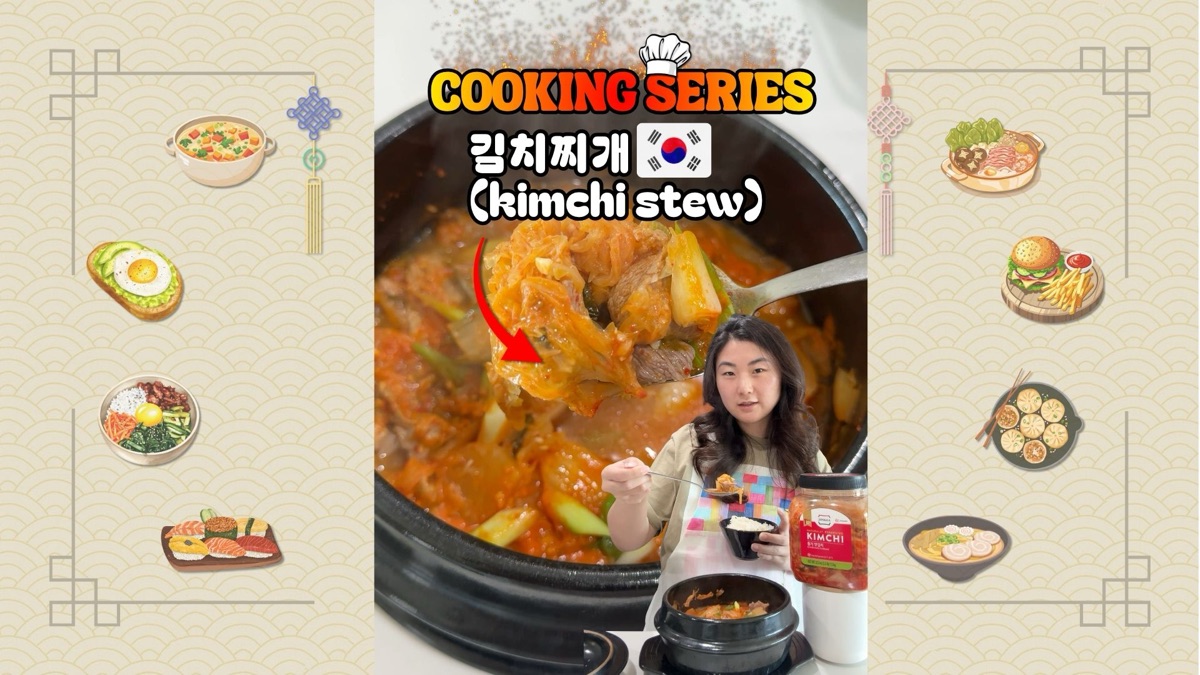
Welcome back to my kimchi series! If your kimchi has gotten really sour and you've been avoiding eating it as a side dish, please do not throw it away. That overripe, pungent kimchi is exactly what you want for 참치 김치찌개, tuna kimchi jjigae.
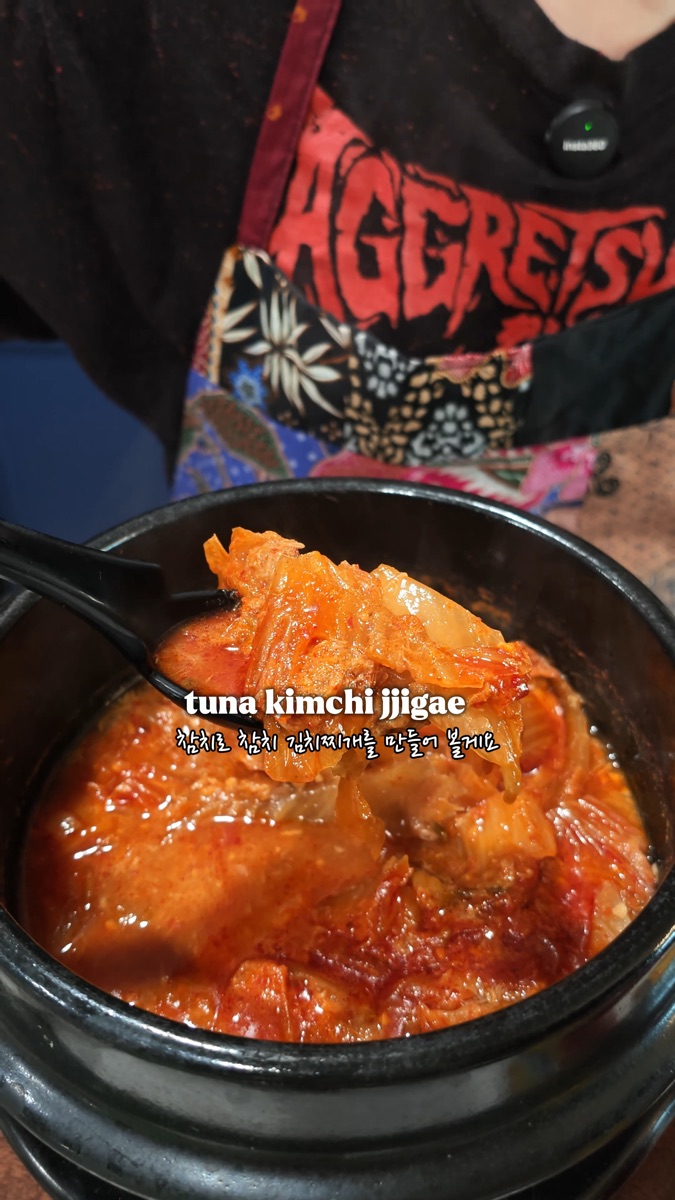
Jjigae just means Korean-style stew, and this version swaps out the more common pork belly for canned tuna. It's lighter, faster, and honestly just as comforting on a night when you want something warm without much effort. This was a regular weeknight dinner for me growing up in Korea. It is the kind of thing you make when your kimchi has been sitting in the fridge for too long and you need to use it up.
I know a lot of people hesitate to cook with canned tuna because they're worried about a fishy smell. I get it. I have one key trick below that completely eliminates that, so keep reading.
The Ingredient Gallery 🛒
Servings
Tap to scale
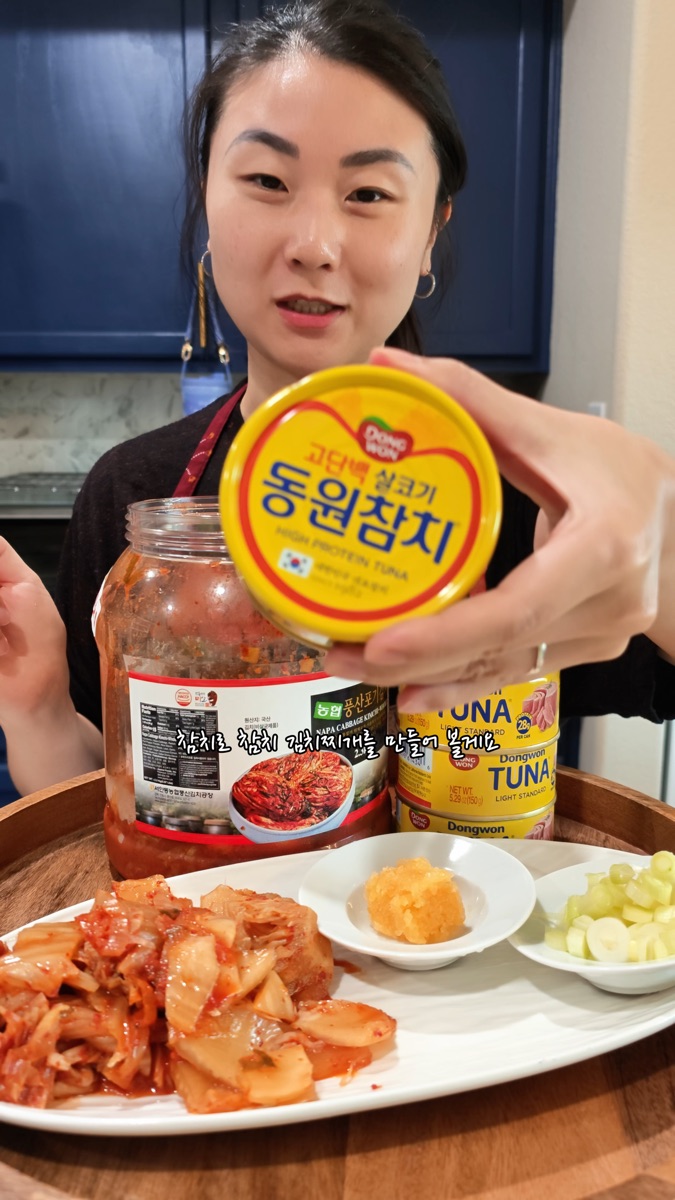
- Sour Kimchi (신김치): 1-2 cups, roughly chopped (the more fermented, the better!)
- Korean Canned Tuna in Oil (참치캔): 1 can (I use Dongwon), do NOT drain
- Cooking Oil (식용유): 1 tsp, any neutral oil
- Minced Garlic (다진 마늘): 3-4 cloves
- Green Onion (대파): 2-3 stalks, chopped
- Rice Water (쌀뜨물): 1.5-2 cups (or plain water)
- Kimchi Juice (김치 국물): to taste
- Gochugaru (고춧가루): a pinch, optional, for color
The Ritual (Step-by-Step) 🥢
1. Fry the Kimchi
Add a little oil to your pot over medium heat. Add the sour kimchi and stir fry for 3 to 5 minutes until it starts to soften and turn a deeper orange.
2. Add the Whole Can of Tuna
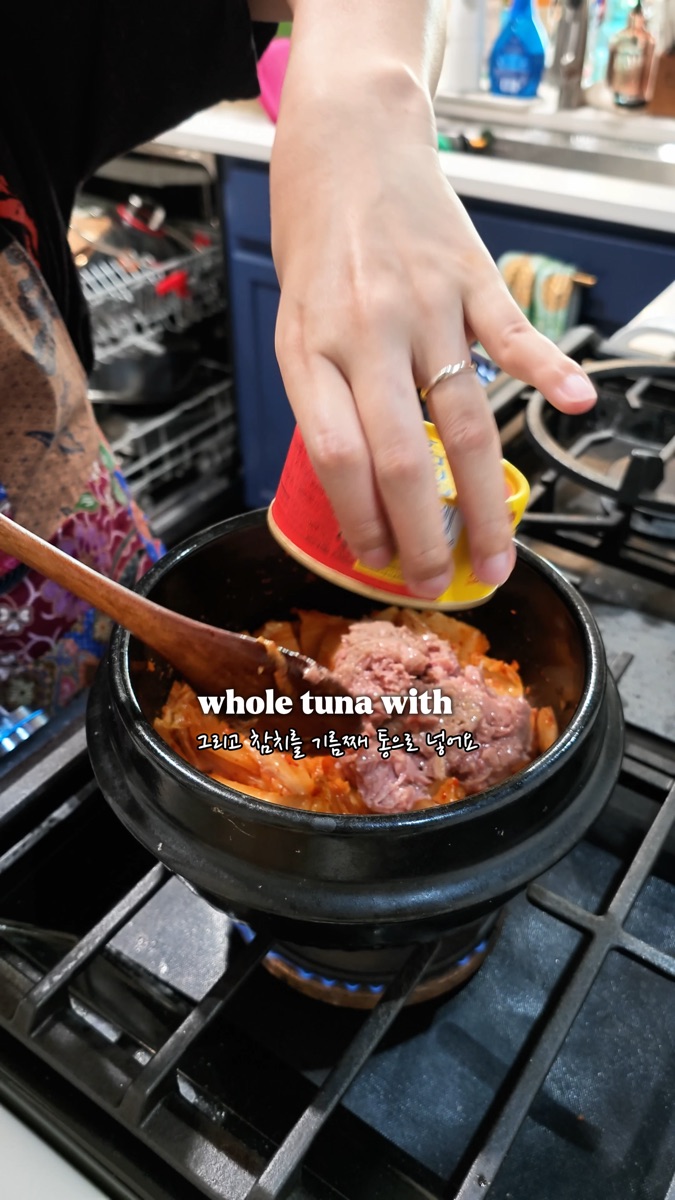
Add the entire can of tuna, oil and all, to the kimchi. Keep stir frying everything together for another 2 to 3 minutes. This step is the whole trick, more on why below.
3. Add the Garlic and Green Onion
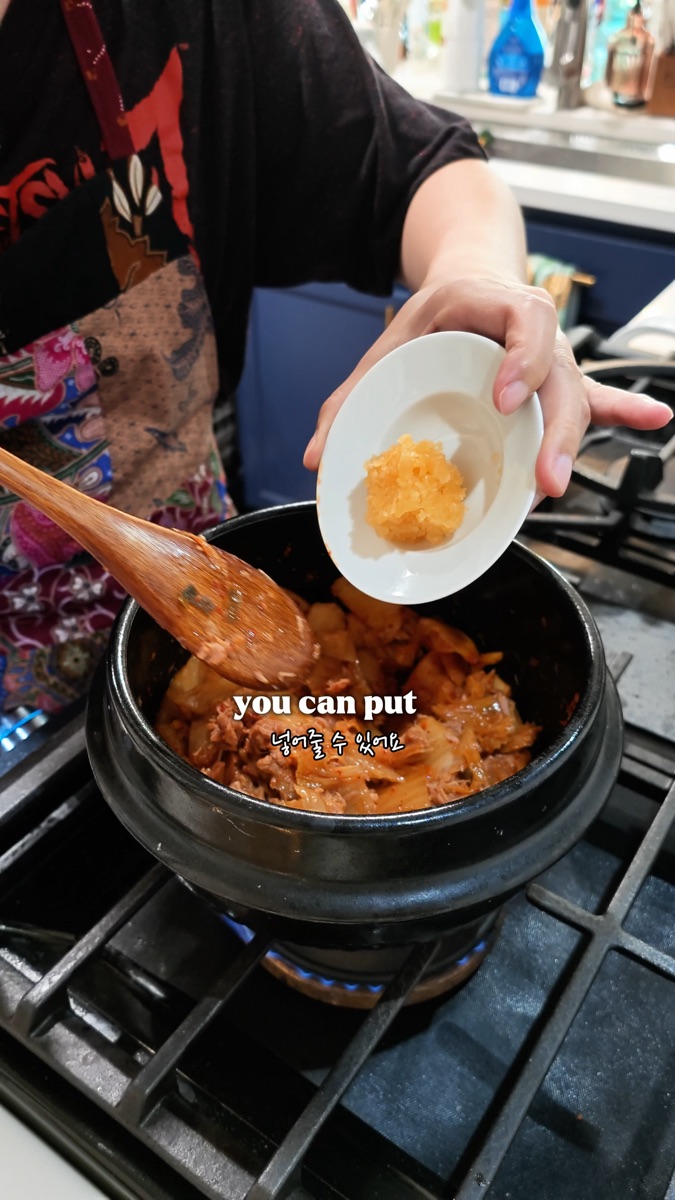
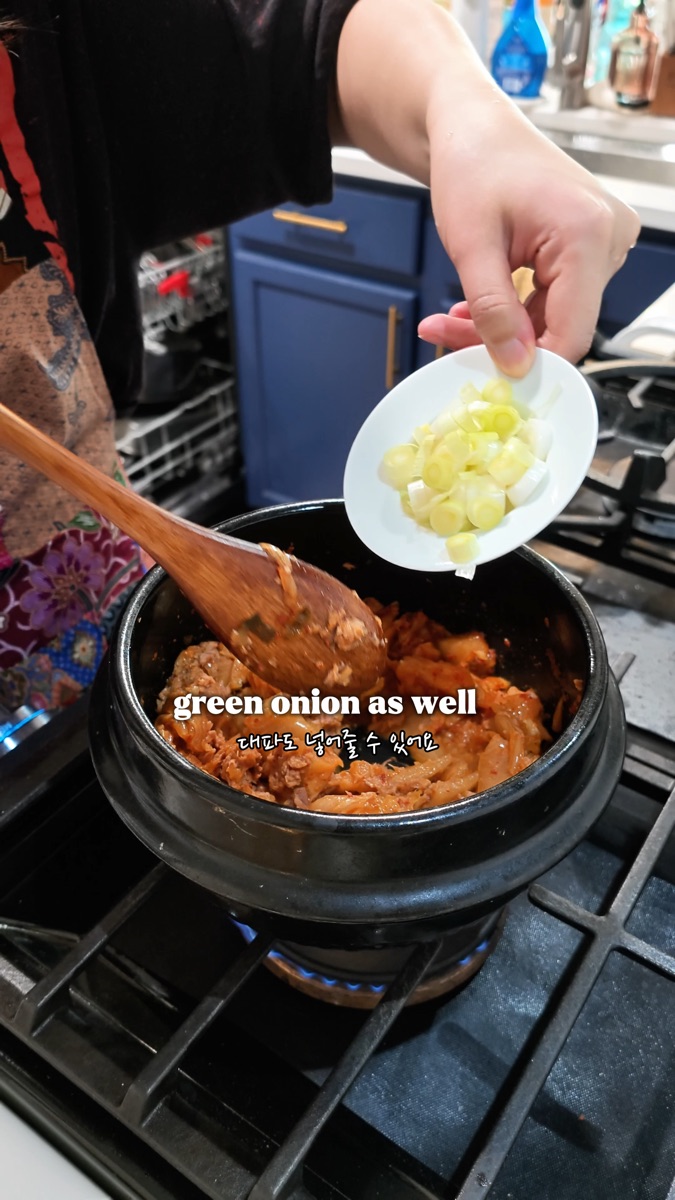
Stir in the minced garlic and chopped green onion until everything is well combined.
4. Pour in the Rice Water
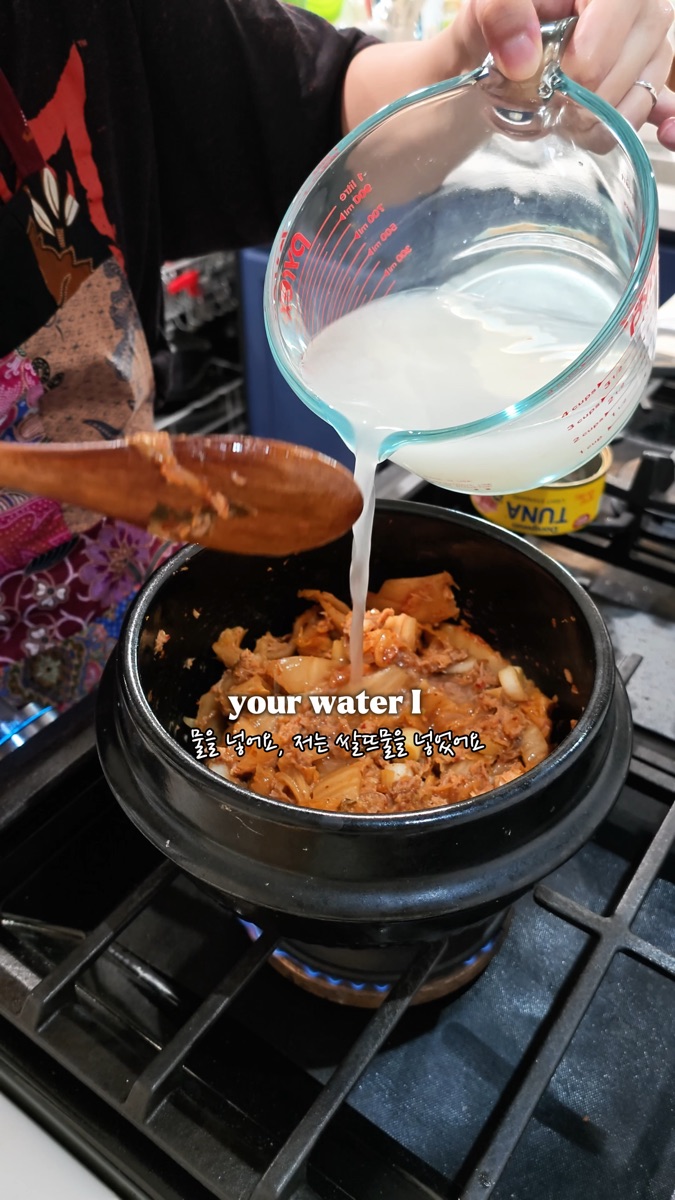
Pour in the rice water (or plain water) until everything is covered.
5. Season with Kimchi Juice and Boil
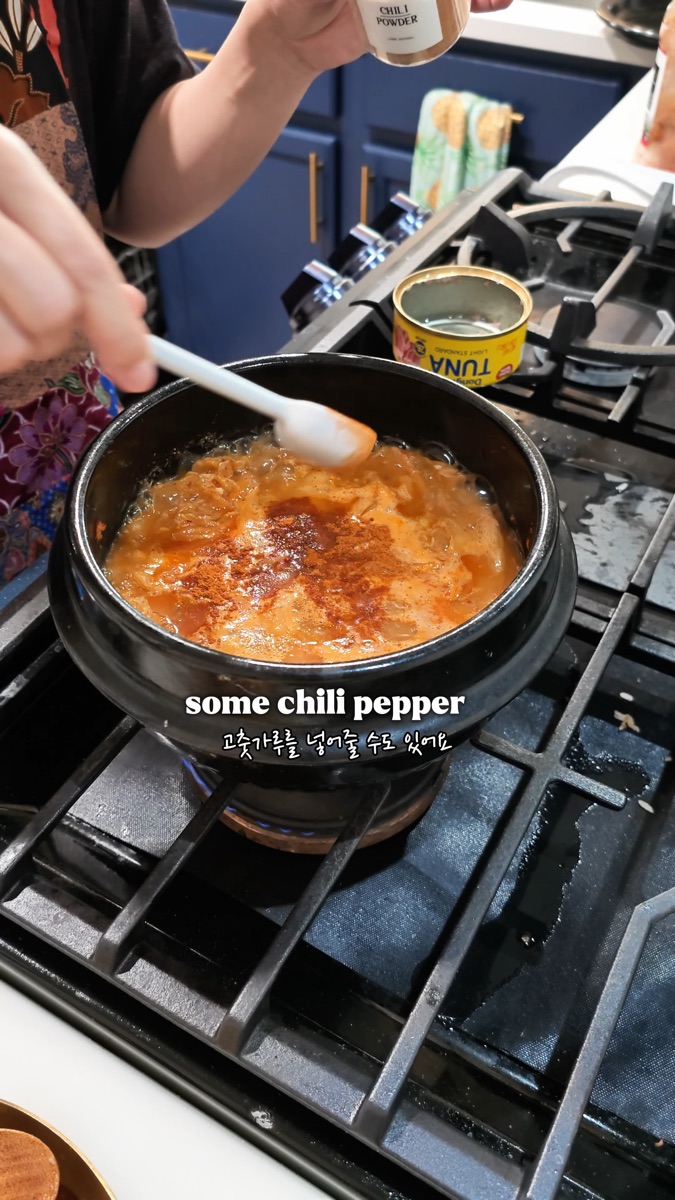
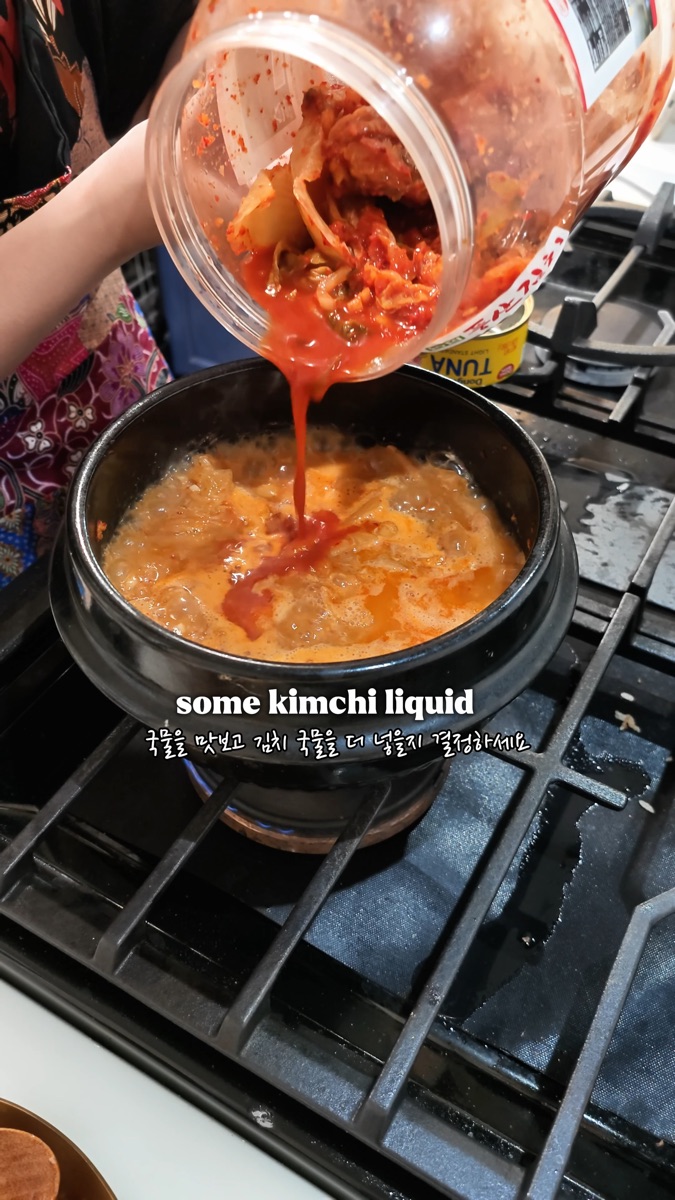
Add kimchi juice to taste for extra depth and sourness, plus a pinch of gochugaru if you want more color. Bring it to a boil and let it cook for about 20 minutes.
6. Serve Hot
That's it. Serve it straight from the pot with a big bowl of steamed white rice.
The Trick That Eliminates Fishiness
This is the part I really want you to pay attention to, because it's what makes this recipe different from most kimchi jjigae recipes out there.
A lot of people are hesitant to use canned tuna in a stew because they're worried it will smell fishy. When my husband Vincent first heard I was making tuna kimchi jjigae, his reaction was pretty much "ewwww."
But here's the secret: stir fry the tuna together with the kimchi before adding any water.
When the tuna hits the hot pan with the kimchi and oil, the fishy compounds cook off immediately. The kimchi's acidity also helps neutralize the smell. By the time you add water and let it boil, the tuna has fully integrated into the stew as a savory, umami-rich protein, not a fishy one.
Vincent's verdict after trying it: "It smells fishy but it doesn't taste that fishy. It kind of has a seafood smell but not the taste." And then: "Honestly not bad. I'm surprised I don't mind it."
From a skeptic who said "ewwww" before even tasting it, I'll take that as a win.
Why Sour Kimchi Is Actually Better
If your kimchi has gotten too sour to eat as a side dish, this is exactly what you should do with it. When kimchi ferments over time, it develops deep lactic acid flavors that are too sharp to eat fresh but cook down beautifully into a rich, tangy, complex stew. Fresh kimchi will work in a pinch, but if you want real depth of flavor, use the oldest kimchi you have.
Korean home cooks keep sour kimchi specifically for cooking. If you're buying kimchi at the store, look for "well-fermented" (잘익은 김치) or "mukeunji" (묵은지), extra-aged kimchi made specifically for cooking like this.
Tips & Notes
Don't drain the tuna oil. I know it feels strange to dump the whole can in, but that oil is flavor. Korean canned tuna in oil is not like regular tuna packed in water. Draining it wastes a lot of the tuna's character.
Use rice water if you can. Rice water is the cloudy water left over after rinsing raw rice. It adds a subtle starchiness and mild sweetness that balances the sourness of the kimchi. Plain water works fine if you forget, but rice water makes a real difference.
Korean canned tuna is not optional for me. You can technically use any canned tuna, but Korean tuna like Dongwon has a firmer, meatier texture that holds up in the stew. Regular water-packed tuna tends to get mushy.
Add tofu if you want more substance. This is optional and not in my version, but a lot of Korean cooks add soft tofu to bulk it up. Add it in the last 5 minutes so it doesn't fall apart.
It tastes better the next day. Like most Korean stews, leftovers are often even better than the first serving. Reheat on the stove until bubbling.
My Husband's Honest Reaction
Vincent is Malaysian and did not grow up eating kimchi jjigae. When I told him we were having tuna kimchi stew for dinner, his first response was concern about the fishiness. He was polite about it, but I could tell he wasn't excited.
I had him taste it straight from the pot while it was still bubbling. He smelled it first ("smells fishy"), took a bite, paused, and then said "honestly not bad." Then he added, "I'm surprised I don't mind it."
Coming from someone who was skeptical from the beginning, that tells me the trick works. If your partner or family is skeptical about canned tuna in a stew, make this version. The stir fry step takes away the barrier that most people have.
Serving Suggestions
Steamed white rice is essential here. Beyond that, keep it simple: a sheet of roasted seaweed (gim), a fried egg, or whatever banchan (Korean side dishes) you have on hand. The stew is rich and flavorful enough that you don't need much else.
FAQ
Can I use fresh kimchi for kimchi jjigae? Fresh kimchi works in a pinch, but sour, well-fermented kimchi is what makes a great kimchi jjigae. The older and more fermented your kimchi is, the deeper and more complex the stew will taste. If your kimchi has gotten too sour to eat on its own, it's actually perfect for this dish.
Does tuna kimchi jjigae taste fishy? Not if you follow the key step: stir fry the tuna together with the kimchi before adding water. This cooks off the fishy smell and locks in the savory, umami flavor of the tuna. The finished stew has a pleasant seafood depth, not a fishy taste.
What kind of canned tuna is best for kimchi jjigae? Korean canned tuna in oil, like Dongwon, is the best choice. It has a firmer texture that holds up better in the stew, and the oil from the can adds great flavor. Don't drain it before adding it to the pot.
What is rice water and why use it? Rice water is the cloudy water left over after rinsing raw rice. It adds a subtle starchiness and mild sweetness to the broth that balances the sourness of the kimchi. It's a common trick in Korean cooking, but plain water works fine if you don't have it.
How long does tuna kimchi jjigae last? Stored in an airtight container in the fridge, it keeps for 3 to 4 days. Like most Korean stews, it tastes better the next day as the flavors deepen. Reheat on the stove or in the microwave until bubbling hot.
What do you eat with tuna kimchi jjigae? Steamed white rice is essential. Serve it alongside simple banchan like seasoned spinach, bean sprout salad, or a sheet of roasted seaweed. The stew is rich enough that you don't need much else.
The Experience 💭
The first spoonful is everything: tangy but not sour, savory from the tuna, warming from the gentle heat. When you cook sour kimchi down, the sharpness completely transforms into something deep and comforting. So please, don't throw away your kimchi because it's sour. Your sourest jar is not a failure, it's dinner waiting to happen.
This is part of my ongoing kimchi series here on Choetina, where I'm sharing all the ways I actually use kimchi at home as a Korean. Stay tuned for the next one.
잘 먹겠습니다!